A receding hairline announces itself slowly in Shelby mirrors: the corners at the temples go first, the front line rises, and one day a photograph shows more forehead than you remember agreeing to. The instinct is to fight it, usually by growing the top longer and arranging it forward. That instinct almost always backfires.
Work through the problem the way a barber does: identify what is actually making the recession look worse, remove those things, then pick the style that suits how far it has gone.
Step one: name the real problem
Recession looks worse through contrast, not through the hairline alone. Long, thin hair on top next to full sides makes the top look thinner by comparison. Hair grown long to cover the temples separates into strands under its own weight and in wind, and separated thin hair shows more scalp than short hair does. Product overload does the same thing: heavy, shiny product clumps fine hair together and opens gaps between the clumps. Most men who think their hairline suddenly got worse have changed one of these three things, not lost a dramatic amount of hair in a month.
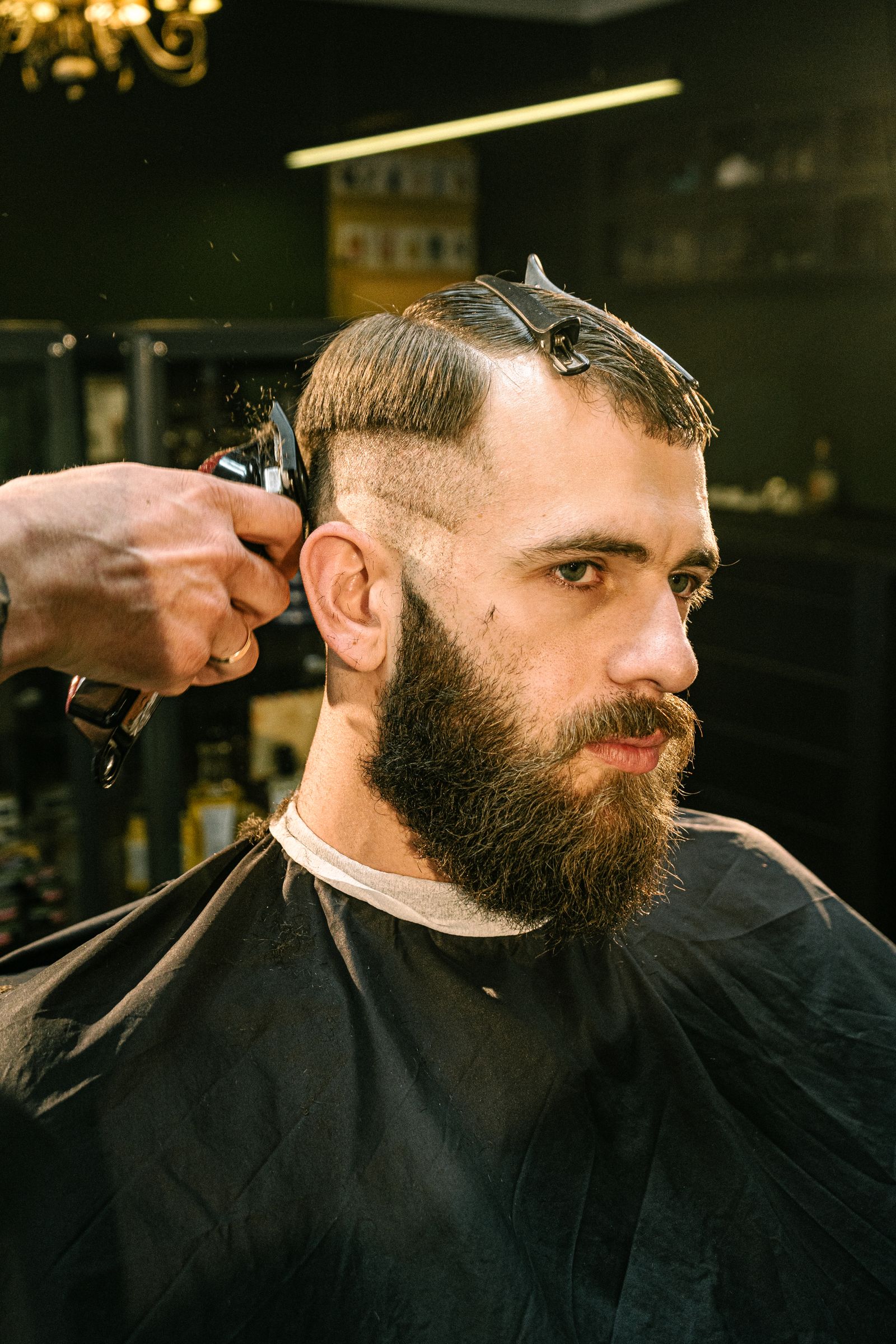
Step two: fix it in the chair, in order
- Take the sides shorter. Reducing fullness at the sides balances the top and makes the whole head read as one deliberate shape instead of full here, thin there.
- Shorten the top more than you planned. Short hair stands more evenly and covers more evenly. A textured cut on top, cut to break up the surface, hides the scalp better than length does.
- Keep the front short and natural. Let the hairline sit where it is. A fringe grown forward to cover the temples moves, separates, and draws the eye to exactly what it was meant to hide.
- Go matte and light on product. A small amount of matte product adds texture without clumping. If you can see scalp in stripes after styling, you used too much or the wrong kind.
- Reassess every few cuts. Recession moves. A style that worked two years ago may be fighting the current hairline, and a good barber will say so before you have to.
Step three: know when the buzz is the honest answer
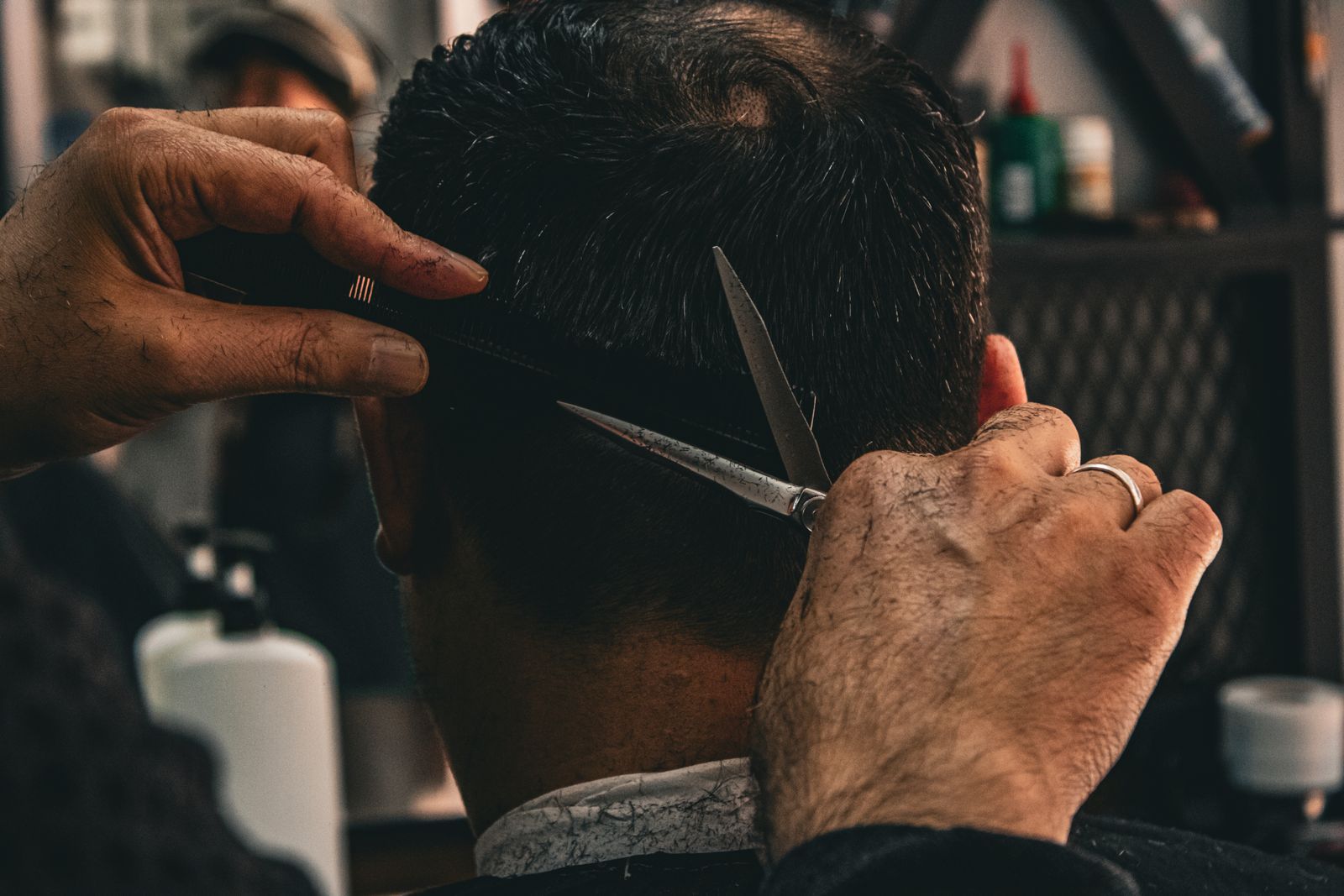
There is a point where the remaining hair on top is thin enough that any styled cut needs daily negotiation, and the negotiation shows. At that point a short buzz or a very short crop does something no arrangement can: it makes the hairline stop being a feature. Even length everywhere removes contrast entirely. Many men describe the switch as a relief, and most wish they had done it a year earlier. A barber can grade the length across a couple of visits if you want to approach it gradually rather than all at once.
Habits at home that quietly make it worse
Very hot water and harsh daily shampooing will not cause recession, but they dry fine hair out and make it look thinner and more brittle. Tight hats worn all day do not cause it either, despite the saying, though a hat is a poor long-term substitute for a cut you feel decent about. The habit that matters most is delay: wearing a style that stopped working for two extra years because the alternative feels like surrender. At Cantrell & Melton Barber Shop, the conversation about going shorter is a normal one, and it stays in the chair.
What about the crown while you are at it
Temples get the attention, but many men are thinning at the crown at the same time, and the two areas call for the same logic. Keep the crown either short enough to sit even or long enough in a deliberate style to cover without arranging, and avoid the in-between length that parts open under light. When you check your hairline in the mirror, check the crown with a second mirror in the same honest light. A barber sees both areas at every visit and can tell you whether they are moving together or whether one needs a different answer. Cutting for both, instead of fixing the front and ignoring the back, is what makes a style look considered rather than patched.
Common questions
Does wearing a hat cause a receding hairline?
No. Pattern hair loss is driven mainly by genetics and hormones. A normal hat does not damage follicles, though very tight headwear worn constantly can break hair shafts.
Will growing the top longer cover the temples?
Rarely. Longer thin hair separates and shows more scalp, especially in wind or bright light. Shorter, textured hair almost always covers better.
Do hair-loss products actually work?
Some treatments slow loss for some men, and a doctor or dermatologist can advise on options. A barber's part is the cut, and the right cut helps at every stage.
Photos in this guide are representative stock images.
← All guides from Cantrell & Melton Barber Shop← Back to Cantrell & Melton Barber Shop